
Shopping cart abandonment has always been a headache for online retailers. Your shoppers carefully select products, add them to their shopping cart, and then just … disappear without finalizing the purchase. And it happens all the time – no matter what you sell – leaving you to watch helplessly as potential revenue slips through the cracks.
Just think about it, for every 100 potential customers, nearly 70 of them will leave without purchasing after adding items to their shopping cart. That’s a huge revenue loss and wasted acquisition spend. In fact, according to SellersCommerce, ecommerce stores lose $18 billion in sales annually because of cart abandonment. Now imagine how much revenue you could recover by converting even a fraction of those abandoned carts.
In this blog, we’ll look at why cart abandonment happens in the first place – and, most importantly, what you can do to reduce your ecommerce cart abandonment rate, turning more hesitant shoppers into real conversions.
TL;DR
- The average cart abandonment rate is around 70%, but rates vary widely depending on industry, region, and device.
- The most common reasons for cart abandonment include shoppers browsing without purchase intent, along with fixable issues like unexpected costs and checkout friction.
- Fixing checkout inefficiencies can significantly reduce cart abandonment, with the potential to recover $260 billion in lost ecommerce sales.
- The most effective ways to reduce cart abandonment in 2026 include simplifying checkout, optimizing for mobile, offering flexible payments, building trust, and running cross-channel recovery campaigns.
- Maropost enables online retailers to reduce cart abandonment by eliminating checkout friction and re-engaging shoppers through email and SMS recovery campaigns.
What is shopping cart abandonment?
Shopping cart abandonment happens when a potential customer adds products to their online shopping cart but leaves the website without completing the purchase. In other words, the shopper shows strong buying intent but drops out somewhere in the process before checkout is finished. So, what exactly counts as an abandoned cart?
Most retailers use specific triggers to flag a session as an abandoned cart based on how their analytics or ecommerce platform is set up. Generally, a cart is considered abandoned if:
- The ‘Add to cart’ action occurs: at least one product must be intentionally added to the shopping cart by the user.
- No transaction completed: the shopper exits the website without reaching the ‘Thank you’ or order confirmation page.
- Inactivity threshold is met: if a user doesn’t interact with the website for a certain period (usually 30 minutes).
- Browser or tab closure: if a user closes the tab or browser entirely and does not return within a set timeframe (often tracked via cookies).
What is the average shopping cart abandonment rate?
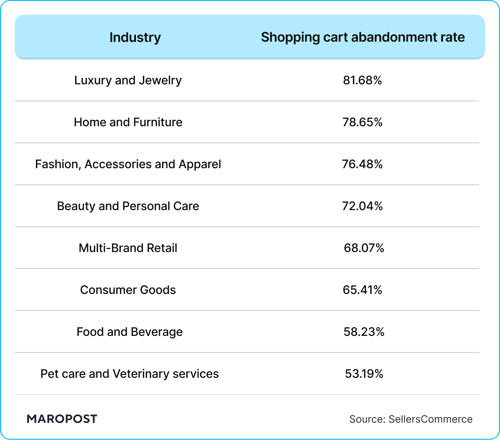
According to multiple studies, the average cart abandonment rate is about 70%. And based on SellersCommerce, that rate can significantly differ based on the industry. Here are some specific numbers:
Cart abandonment rate also varies by region and device. For example, cart abandonment is highest on mobile devices, where 75.5% of carts are abandoned (which is 5.31% above the global average). Desktop shoppers abandon 69.04% of carts, while tablets see the lowest abandonment rate at 68.55%.
Top reasons for online shopping cart abandonment
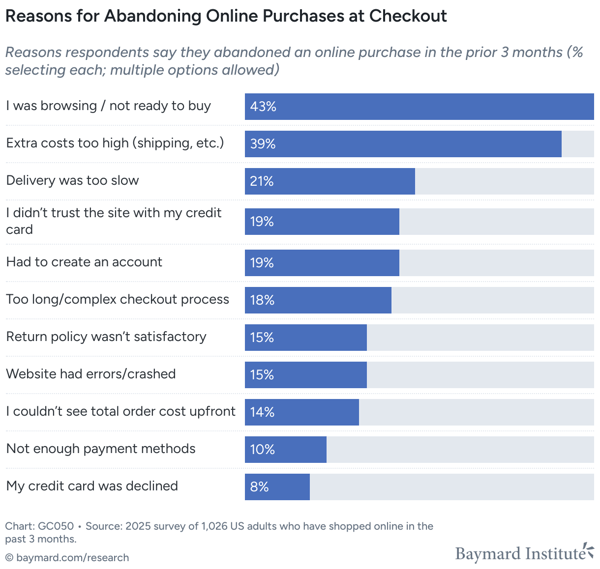
Online shoppers abandon their carts for a variety of reasons. Now, to be fair, a significant portion of cart abandonment happens because of the nature of how users shop online. Some shoppers just compare pricing, save items for later, explore gift options, etc. Obviously, you can’t influence that. And according to a study from Baymard Institute, 43% of US online shoppers have abandoned a cart because they were just browsing but not actually ready to buy.
Some other common reasons for cart abandonment include unexpected costs, slow delivery, lack of trust, mandatory account creation, complicated checkout process, unsatisfactory return policy, lack of diverse payment options, and more. And fortunately, these are mostly fixable.
Cart abandonment isn’t the end: $260 billion in revenue can be recovered
As you’ve seen from the stats above, in many cases cart abandonment happens because of inefficiencies in the checkout process. And by focusing on fixing checkout usability issues alone, the average large-sized ecommerce website can actually see a 35.26% increase in conversion rate, according to Baymard Institute.
Based on combined U.S. and EU ecommerce sales of $738 billion, a 35.26% improvement in conversion rates represents as much as $260 billion in recoverable revenue, achievable through optimized checkout flow and design.
Download the playbook: How ecommerce brands turn lost checkouts into revenue
How to reduce shopping cart abandonment: top 10 proven strategies that work in 2026
So what exactly can you do to reduce your cart abandonment rate? These are the top 10 proven strategies that work in 2026:
1. Be upfront about the total cost
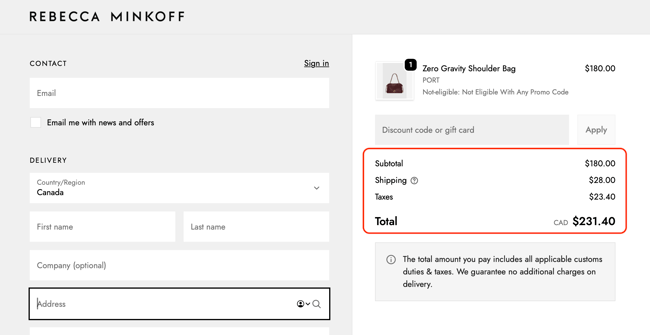
Based on data from SellersCommerce, 48% of shoppers abandon their carts because of additional charges at final checkout. This is totally avoidable by simply being more transparent with shoppers. That means clearly displaying all costs upfront, including taxes and shipping charges, early in the process (ideally, before a user reaches the final checkout stages).
Plus, you can provide price comparison tools to help shoppers see how your offerings stack up against competitors.
2. Simplify the checkout process and improve UX
Your checkout process needs to be quick and effortless because shoppers clearly prefer speed and simplicity when making online purchases. If there are too many steps or if the process isn’t fast and intuitive, abandonment is inevitable. The stats above show that nearly 1 out of 5 shoppers have abandoned a cart due to a “too long / complicated checkout process.”
In practice, that means minimizing the number of steps a user needs to take to finalize the purchase. And according to data from MarketingLTB, reducing checkout steps from 5 to 3 can decrease cart abandonment by 27%.
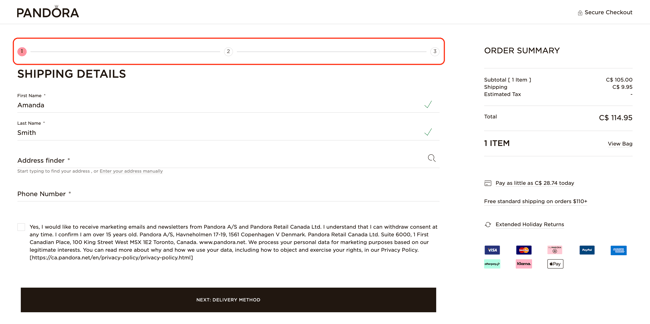
On top of that, you can display a progress bar, showing the user’s progress throughout the checkout process and providing a greater sense of control and transparency. When shoppers can see how much they’ve already invested in the process, they’re less likely to drop off midway through checkout.
Recommended on-demand webinar: First click to checkout: building an exceptional ecom UX
3. Optimize for mobile-first checkout
Optimizing the checkout experience for mobile isn’t a ‘nice to have’ anymore, especially considering that over half of all online purchases are now happening through smartphones. In fact, based on Statista, by 2027, mobile commerce will account for 62% of all ecommerce transactions.
Moreover, stats say that 13% of mobile shoppers abandon carts because of bad mobile checkout design. Here are some mobile-first checkout best practices to implement:
- Design for touch interactions (use large buttons, clear spacing, and tap-friendly form fields).
- Support autofill and address autocomplete (reduce typing by enabling browser autofill and smart address lookup).
- Design for small screens (enable sticky CTA buttons, clear progress indicators, and readable font sizes without zooming).
- Offer mobile-native payment options (including Apple Pay, Google Pay, and other digital wallets to speed up payment).
4. Offer a guest checkout option
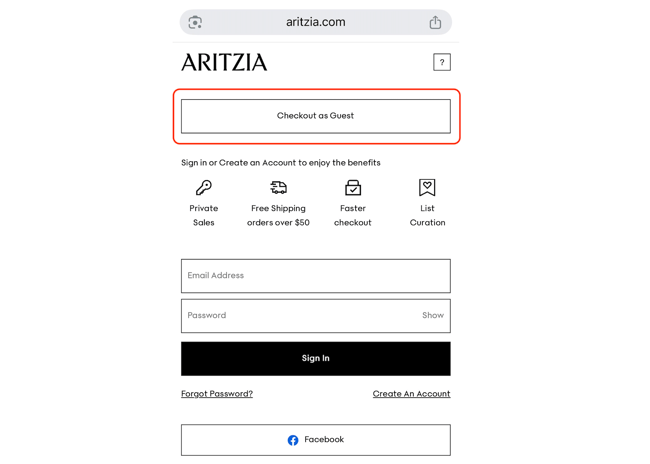
Offering a guest checkout option is one of the most effective ways to reduce shopping cart abandonment. Data from Baymard shows that nearly 20% of shoppers drop off at checkout when they are forced to create an account. For first-time shoppers or those looking to make a quick purchase, in particular, that can be a major turnoff.
In addition, based on research from Capterra, 66% of online shoppers expect to complete online checkout in 4 minutes or less, while 29% expect to finish it in under 2 minutes. Guest checkout provides a faster and smoother experience for first-time buyers, reduces friction, and ultimately helps you reduce abandoned carts.
5. Provide flexible payment options
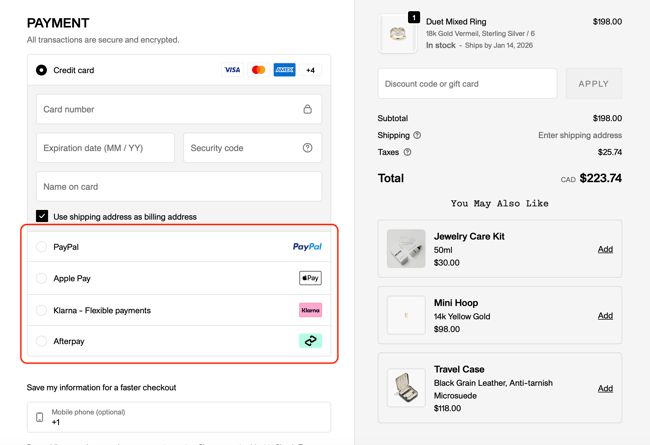
According to research, 76% of US consumers want the ability to use their preferred payment method when shopping online. And when their preferred method isn’t available, many will abandon the cart without completing the purchase. Some of the most popular options include:
- Shopping apps (PayPal and Shop Pay)
- Digital wallets (Apple Pay, Samsung Pay, and Google Pay)
- Buy Now, Pay Later (Klarna, Affirm, and Afterpay)
The Buy Now, Pay Later (BNPL) option in particular is getting increasingly popular. Based on stats from Chargeflow, merchants often report lower cart abandonment after introducing Buy Now, Pay Later options. Better yet, BNPL is often linked to higher order values, typically increasing cart sizes by 15–40% depending on the merchant and sector.
Recommended reading: How to boost your checkout conversion rate in 5 easy steps
6. Clearly highlight your return policy
Returns are inevitable in ecommerce – and shoppers want to know what to expect in case they’re not happy with their purchase. Being transparent about your return policy upfront helps you lower the abandonment rate by reducing the perceived risk and building trust and credibility. Here are some best practices to follow:
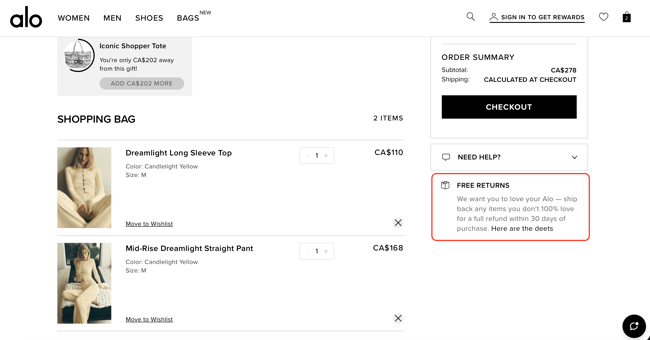
- Make your return policy easy to find (display return policy information on product pages, in the cart, and during checkout, not just in the site footer).
- Be transparent about costs (clearly state whether return shipping is free or paid to avoid surprises later).
- Reinforce the policy at checkout (remind shoppers of your return policy at the checkout page to reduce last-minute hesitation).
7. Add social proof and trust signals
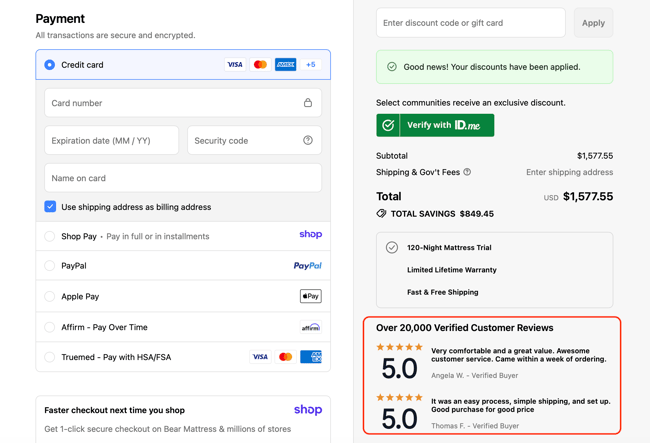
Nearly 20% of online shoppers abandon their carts simply because they don’t trust the website enough to share their payment details. Adding social proof and trust signals (especially on the checkout page) can help reduce cart abandonment by reassuring shoppers right when they’re deciding whether to complete their purchase.
These signals show that your store is legitimate, secure, and trusted by other customers. Examples include:
- Star ratings and testimonial snippets
- "In demand" tags: ("12 people bought this in the last hour")
- Live proof (“Someone in New York just bought this”)
- Transactional trust (security badges and SSL certificates)
8. Add an AI chatbot to your checkout page
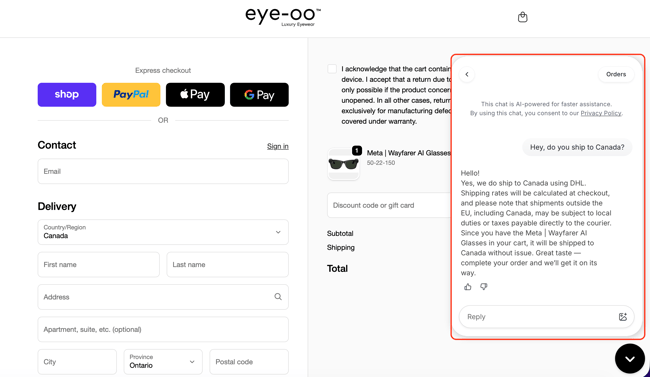
Adding a AI chatbot widget to a checkout page is another highly effective yet heavily underutilized strategy to reduce cart abandonment. Multiple studies have shown ecommerce chatbots can cut cart abandonment by 20-30%. And rightly so. AI chatbots can immediately answer last-minute questions about your shipping or return policies to reduce hesitation, help resolve payment errors, or even recommend complementary products.
When adding an AI chatbot to your checkout page, here’s how you can get the most out of it:
- Focus on checkout-specific use cases: (train your chatbot to answer common questions about shipping, returns, payments, promo codes, etc.).
- Set proactive triggers strategically: (trigger proactive chat based on intent or hesitation signals – like idle time or errors – not immediately on page load).
- Ensure a seamless handoff to human support: (provide a clear escalation path to your human support agents for issues the chatbot is unable to resolve).
9. Optimize your cart abandonment emails
Running cart recovery email campaigns is one of the most impactful ways to re-engage shoppers who left without completing their purchase and recover otherwise lost revenue. And the numbers back it up. According to stats published by Convertcart, abandoned cart recovery emails achieve a 41% open rate, 21% CTR, and 50% conversion rate.
Want your cart recovery email campaigns to really work? Here’s how to craft and send them more strategically:
- Maintain the "golden window" timing: Send a three-part email sequence (1 hour, 24 hours, and 72 hours after abandonment), which is considered the industry standard.
- Include direct-to-checkout links: Remove friction by ensuring your CTA button rebuilds each specific cart session and takes shoppers straight to the payment page.
- Avoid boring subject lines: Use catchy subject lines like “Good news: We’re still holding this for you” instead of generic ones like “Complete your purchase.”
- Tier your incentives: Don’t offer a discount in the first email; you don't want to "train" customers to abandon carts just to get a coupon.
- Include scarcity triggers: Create urgency with copy like "we can't hold your items forever" or "low stock" to compel shoppers to act immediately.
Recommended reading: Cart abandonment emails: best practices and real examples
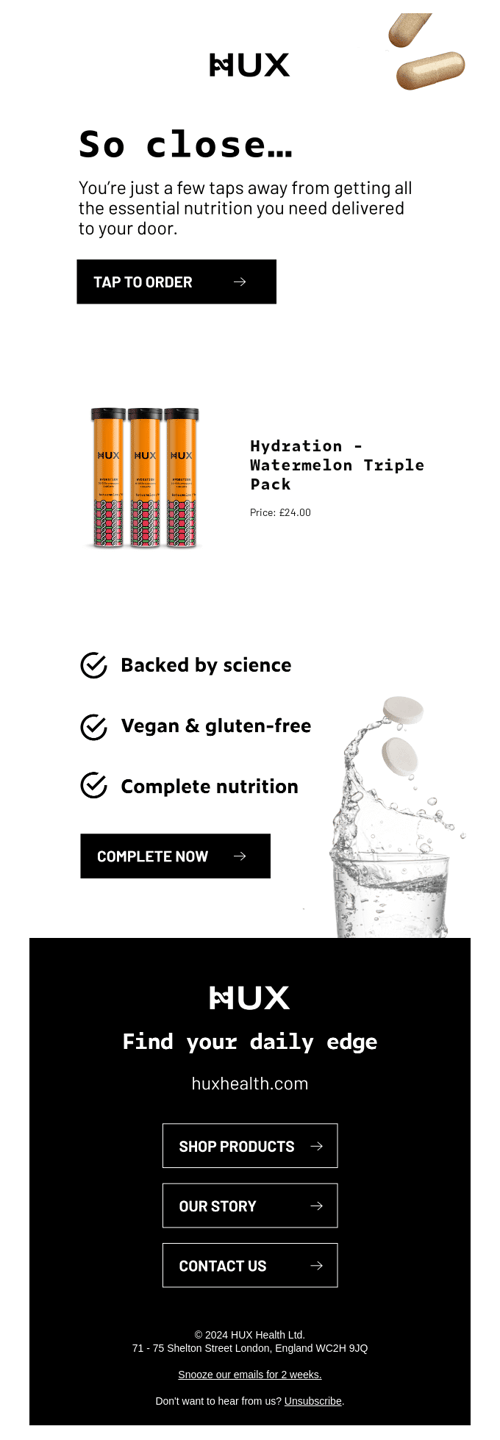
Image source: Really Good Emails
10. Run cross-channel cart recovery campaigns
While running effective cart abandonment email campaigns can help you recover a significant portion of abandoned carts, you shouldn’t rely on email marketing only. The strongest cart recovery strategies use more than one channel. Data from Omnisend shows that campaigns using three or more channels drive a 287% higher purchase rate. Additionally, campaigns that include SMS are 47.7% more likely to convert.
When setting up cross-channel cart recovery campaigns, here’s what to keep in mind:
- Start with email as the foundation: Email works well as the primary recovery channel, providing detailed reminders, product visuals, and a clear path back to checkout.
- Add SMS for urgency and immediacy: SMS messages cut through noise and encourage quick action with time-sensitive reminders or incentives.
- Keep messaging consistent but channel-appropriate: Use email for social proof and product details, SMS for time-sensitive stock alerts, and retargeting ads for persistent visual reminders.
- Segment by cart value: Prioritize high-value carts with more intensive cross-channel follow-ups and personalized incentives while using a standard, low-cost automation flow for smaller orders.
Cart abandonment is an unpleasant reality that all ecommerce stores face. But when handled strategically, you can recover at least some of those abandoned carts and improve your conversion rates. That’s where having the right tools makes all the difference. Here’s how using Maropost’s unified commerce platform can help you recover abandoned carts and increase conversions:
- Smooth checkout process: Create a fast, frictionless checkout experience that reduces drop-offs at the final stages.
- Flexible payment options: Offer multiple payment methods to meet your shoppers’ preferences and increase checkout completion rates.
- Omnichannel cart recovery campaigns: Set up omnichannel cart recovery campaigns across email and SMS to re-engage shoppers and bring them back to complete their purchases.
- AI chatbot: Add a conversational AI chatbot to provide real-time assistance, answer last-minute questions, and help your customers shop with confidence.
Book a demo now to see the Maropost unified commerce platform in action and learn how it can help your business generate more sales without needing to orchestrate a bunch of disconnected tools.