
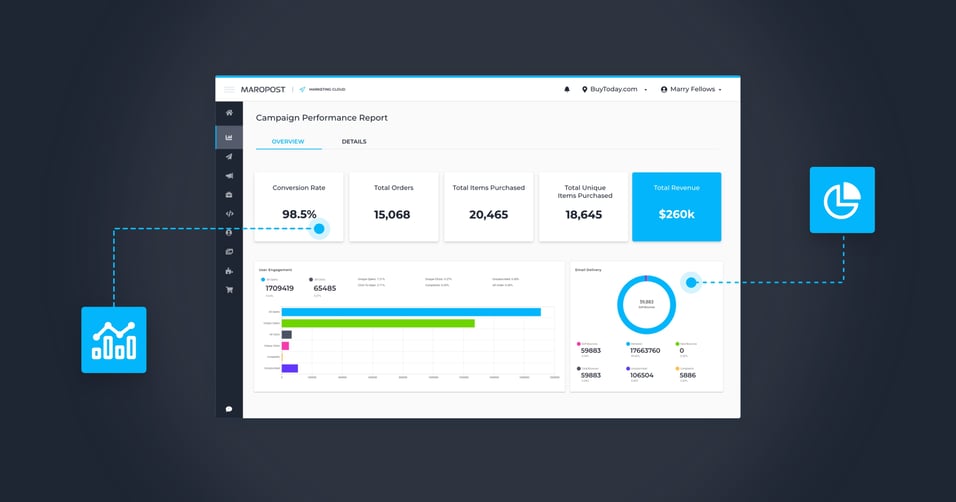
You might be wondering – how much can you really get in terms of email marketing ROI? Is it even worth the effort?
TikTok, SMS, ecommerce, SEO, and email automation are all competing for the same budget in 2026, and privacy rules shape what you can measure. How do you pick the mix that actually returns revenue? Keep reading.
You can easily stretch yourself too thin and burn out if you try to do it all. But look at it this way – your overwhelm is actually the abundance of opportunities. It’s now easier than ever to promote your brand online. You just need the right mix of marketing activities to deliver email marketing ROI specifically.
Is email marketing worth it?
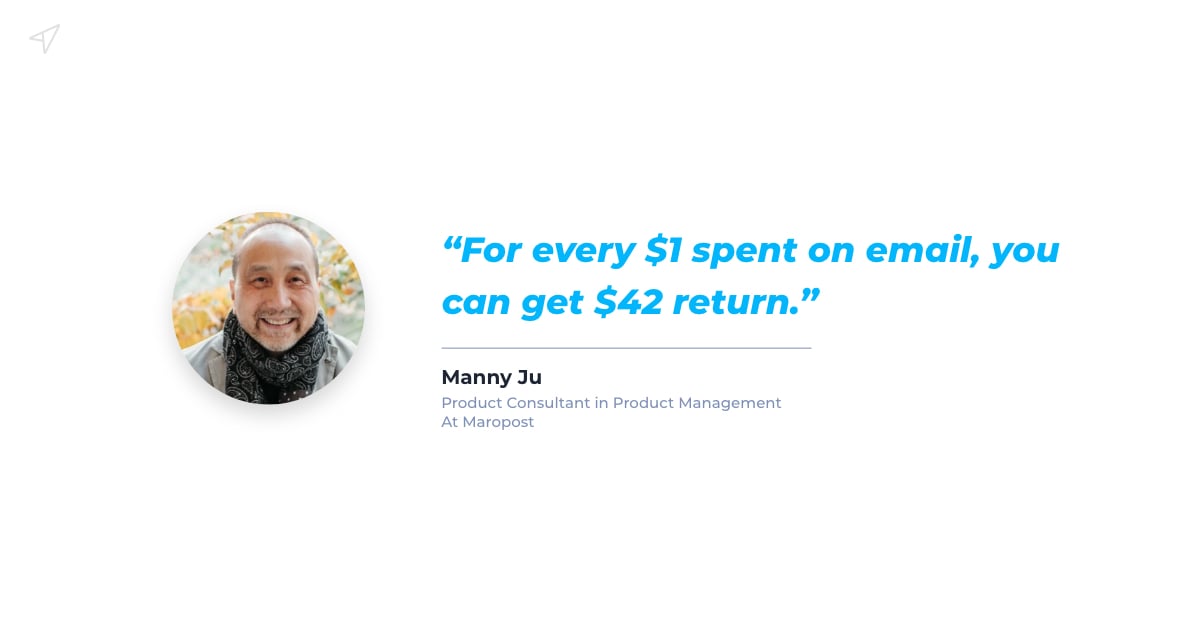
Short answer: email has long been one of the highest-returning channels, but don’t treat a single ratio as a 2026 guarantee. A Litmus roundup cited by Manny Ju, then a product consultant at Maropost, put the return at $42 for every $1 spent. Earlier write-ups used a figure closer to $38. Both are historical benchmarks. What still holds is that a relevant, automated program returns more than a blast.
Of course, it’s not as simple as that. Blindly sending out mass emails will not produce that return. So what will?
- [Designing automated workflows to save time](#sub1)
- [Sending automated triggered emails](#sub2)
- [Crafting compelling subject lines](#sub3)
- [Inserting an appealing call to action](#sub4)
- [Measuring the right email marketing KPIs (not just the open rate)](#sub5)
Now that sounds like a lot of work. And it might be. But, with the right email marketing tools that are focused on automation and deliverability, all of that becomes second nature.
Designing automated workflows to save time
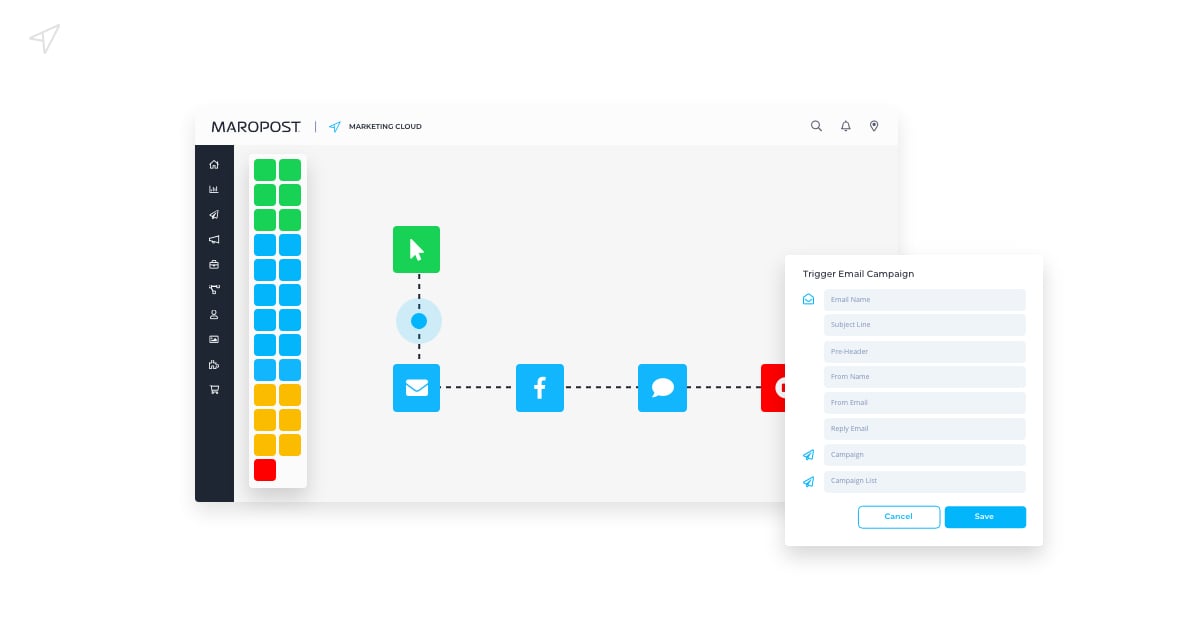
Automated workflows, aka customer journey maps, are extremely powerful. The idea is that you set up your campaign once and then it pretty much takes care of itself. Hello extra time!
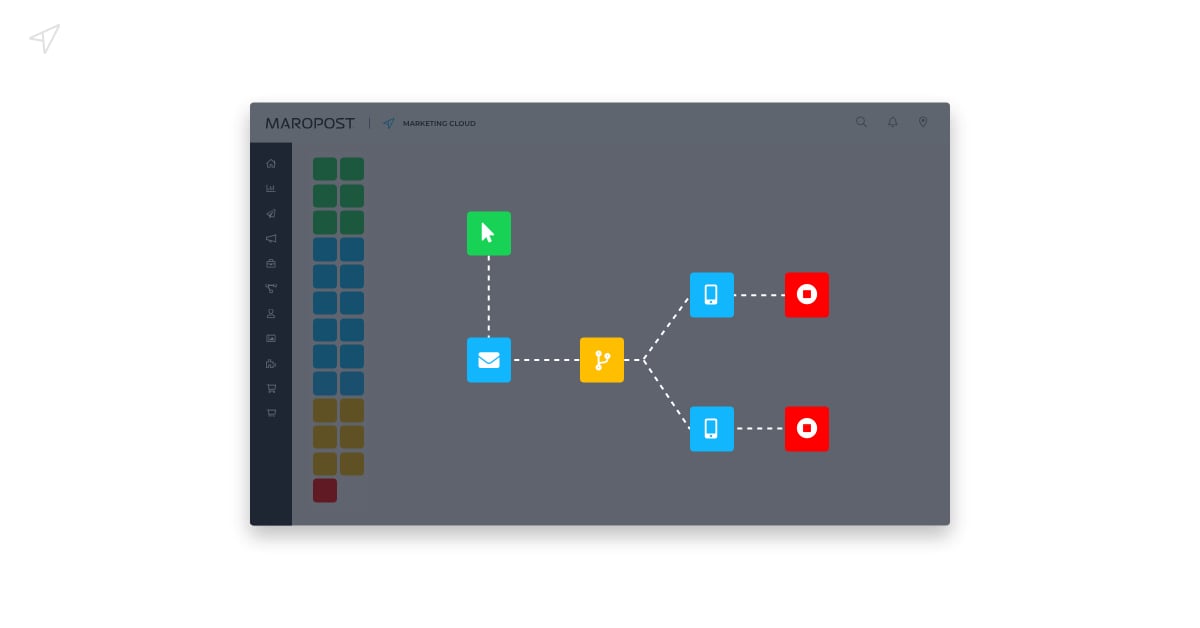
You’ll need to brainstorm a lot at first and possibly adjust along the way. But overall you’ll get much more control over various touchpoints with your customers.
Sending automated triggered emails
Once you set up those automations, you can then remove lots of manual repetitive work. Let’s say someone abandons their cart on your ecommerce site. It’s one thing to just send them a reminder email about it. It’s a whole different story to send a highly personalized message with their name, product recommendations and a discount code. Which one do you think will help them make a decision faster?
Crafting compelling subject lines
This goes without saying – to get any annual ROI from your emails, you need to entice people to open them. And the subject line is the first step. The general consensus is this: make it noticeable.
Put yourself in the shoes of your customer and think back to the last time you opened a marketing email. What made you do it? You know better than anybody how annoying it is to see another “Sale” or “Black Friday deals” subject line. On the other hand, when the subject is funny, provoking, sarcastic and, above all, personal and original, you’re a lot more likely to give it a chance.
Inserting an appealing call to action
So let’s say they opened your email. That’s just half of the battle. You can’t just achieve 70% open rate and call it a day because you didn’t get any revenue out of that.
Next comes the call to action. Or maybe even a few. You need to make it very clear to the reader what you’re trying to make them do.
Maybe you’d like them to book a demo. Maybe they can start a free trial right away. In that case, don’t send them to a sales rep – that will just waste everyone’s time and will annoy them.
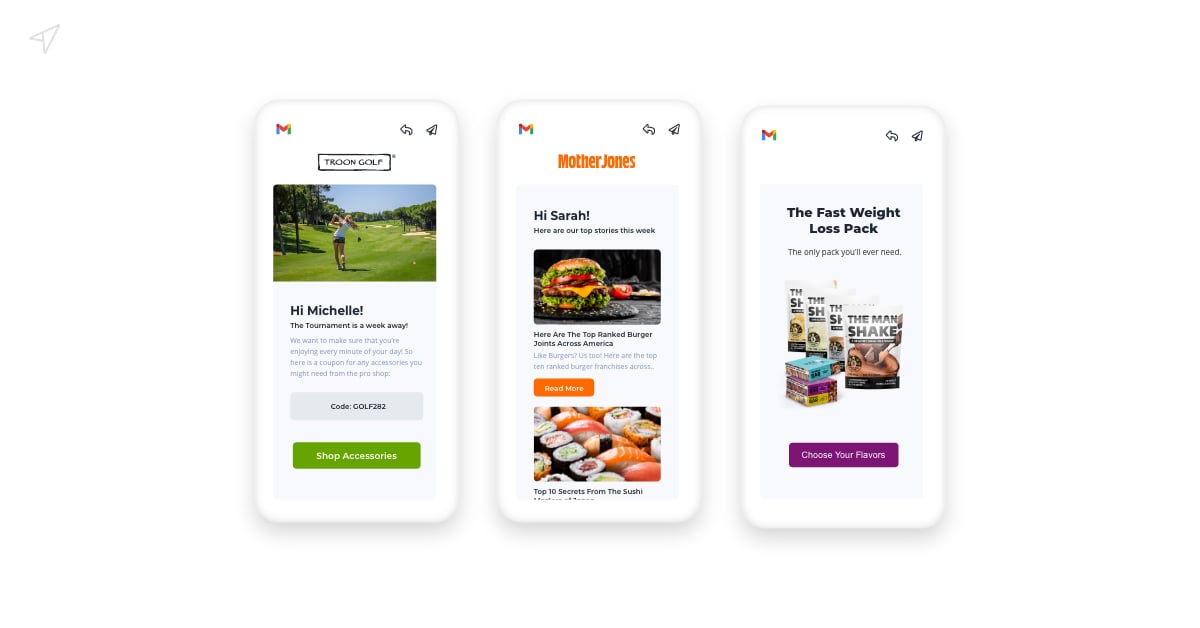
Is there a deal that’s expiring? Make that obvious! Is there a free resource they can download? Or will they have to register for a webinar first?
If you can’t figure it out, send a test email to a colleague who has no context. They’ll tell you right away if the content and the CTAs are clear.
Measuring the right email marketing KPIs (not just the open rate)
Like you already know, open rates aren’t everything. Apple’s Mail Privacy Protection, introduced in 2021, preloads images, so open rate has been an unreliable KPI ever since. In 2026, judge the program on what happens after the open. Useful measures include:
- Number of delivered emails
- Click-to-open rate
- Unsubscribe rate
- Bounce rate (hard and soft)
- Spam complaints
- Social shares
- Forwards
- Conversions – the most important ROI-driving KPI (duh)
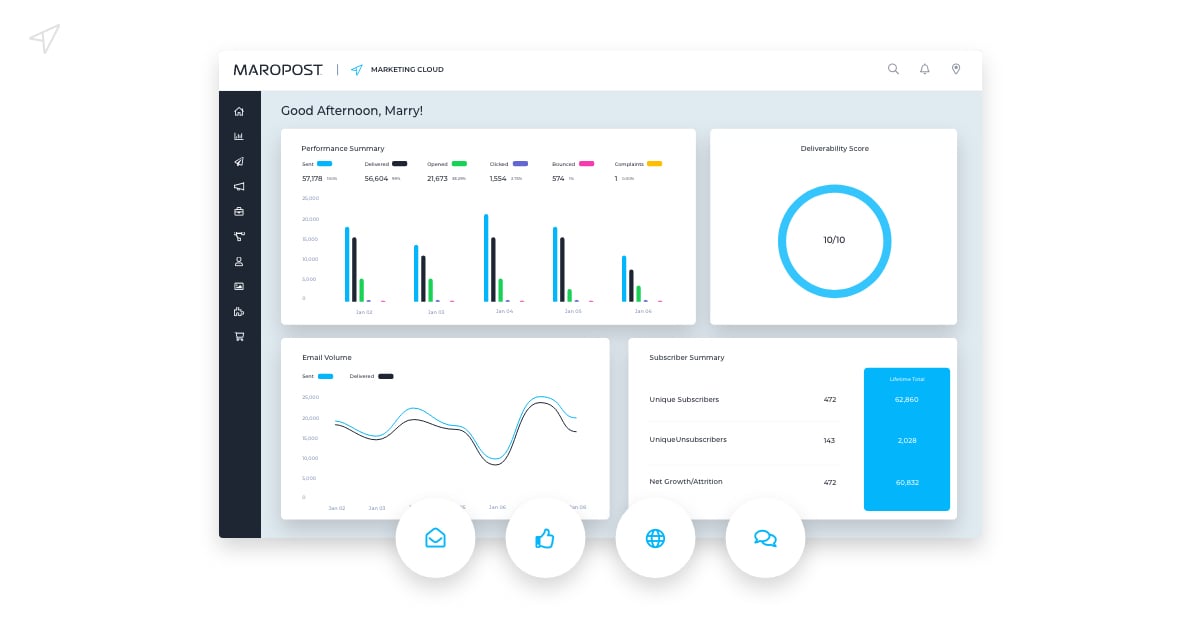
Despite newer channels, email remains one of the most direct ways to turn a campaign into revenue. Maropost email and SMS marketing platform is built for that automation and deliverability work. Start a free trial or book a demo.