
Retailers in 2026 are still deciding whether the platform they bought years ago can run the business they have now. Online selling is no longer the experiment it was before 2020. The useful question is whether the system can sell across channels, markets, and wholesale accounts without a pile of add-ons.
A Forrester forecast once pointed to ecommerce taking about a quarter of retail by 2024. That year has passed. The checklist below is the part that still tells you if you have outgrown the software.
The question ecommerce store owners are asking now is, “How can I tell if I have the best ecommerce platform for my business?” To help online retailers answer that question, here are 10 signs that you’ve outgrown your current ecommerce software.
- Can’t sell everywhere or reach other geographic markets
- Unable to satisfy customer needs
- Existing platform lacks the features and functionality you need
- Can’t customize your platform
- Paying more for less thanks to countless add-ons
- Can’t effectively sell B2B
- No integrations with other platforms
- Don’t know what’s working (no reports, insights)
- Forced to do lots of repetitive things manually
- Can’t manage inventory
Sign #1: Can’t sell everywhere or reach other geographic markets
For many online stores, selling only to their own region was plenty when they first launched. As the global market has embraced not just online shopping but cross-border ecommerce, retailers who can’t sell internationally are missing out on a significant opportunity.
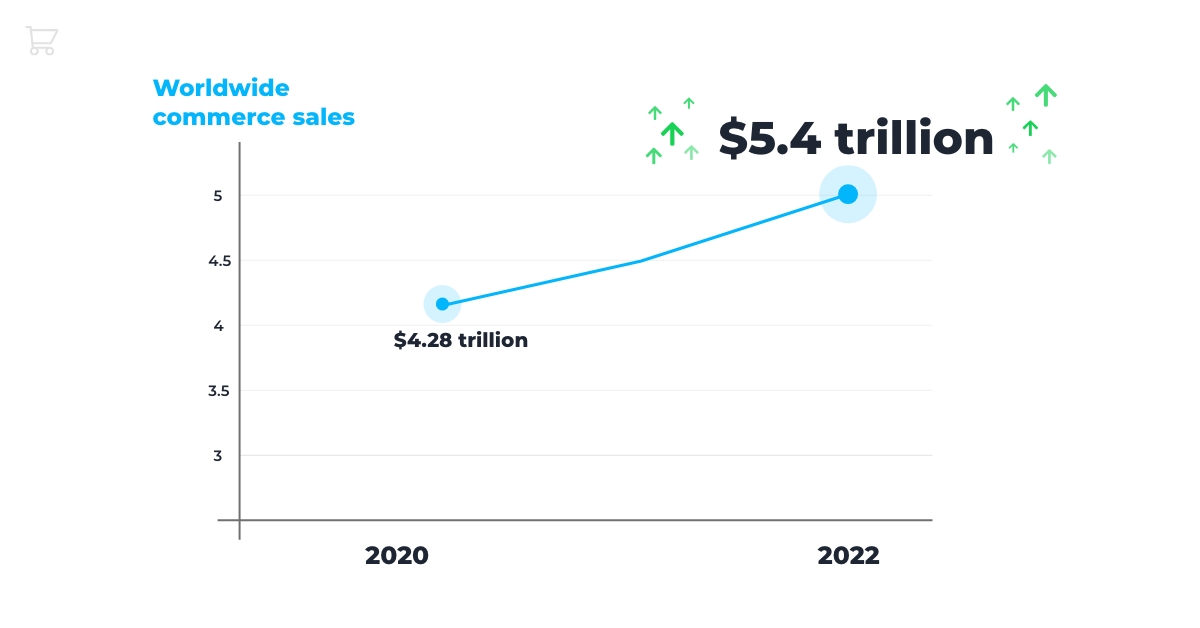
How significant? When this article was first published, Statista put worldwide ecommerce sales at $4.28 trillion in 2020 and expected them to pass $5.4 trillion in 2022. Those years are over. The operating requirement has not changed: localization, international payments, more than one language, and shipping partners the platform can actually talk to.
This goes well beyond the Asia Pacific market. Latin America is part of the same decision. A ClearSale note cited with the original article put Colombian online spending in the billions of dollars, split across computers and phones. Treat that as a 2021-era snapshot, not a 2026 total.
Selling to a global market requires more than a shift in mindset. Your ecommerce platform needs to be able to support a wide variety of features to make this a reality. These features include localization of your website, connections with payment providers that can handle international payments, support for different languages, and access to payment processing for credit cards used in different regions. If your existing platform is lacking in the ability to work with fulfillment and shipping providers, or if the interface is difficult to use, that can also hinder your move to the global marketplace.
Sign #2: Unable to satisfy customer needs
Your ecommerce store thrives thanks to your customers. So, you can’t say that your current solution is the best platform for ecommerce websites if you can’t meet your customers’ wants and needs. If you’re struggling with ecommerce software that is little more than a shopping cart with checkout functionality, you’re definitely missing the mark on customer expectations.
Today’s online shopping experiences need to live up to the high bar that’s been set by online giants like Amazon, Walmart, and Apple, who offer seamless experiences and nearly unlimited products. Modern ecommerce shoppers are experienced and savvy, and they know what your competitors are offering.
Consumer demands for online shopping include:
- A clean and attractive design
- Navigation that is easy to understand and use
- Secure payments
- Clear guidelines for hassle-free returns
- On-site search
In fact, straightforward navigation and on-site search are such important features that80% of customers will leave a website for a competitor if the site is hard to navigate or the search utility isn’t helpful.
If your current ecommerce platform doesn’t provide these things at a minimum, it’s time to consider moving to a more sophisticated solution. More importantly, these are just the basic requirements. Online shoppers want even more from the brands that they buy from. These features include:
- Personalized recommendations
- Special deals and the ability to earn free shipping
- Easy payments without false declines
- Authentic reviews from other customers
- Omni-channel experiences, so that they can seamlessly switch between devices
Sign #3: Existing platform lacks the features and functionality you need
In Sign #2, we discussed those things that modern online shoppers need. But what about your business? You have requirements for your ecommerce platform as well, and if they aren’t being met, it’s time to think about a move.
What sorts of things might be missing from your current solution?
- The ability to integrate with other marketplaces, like Amazon and eBay
- Pre-integrated payment capabilities
- Backend functionality that supports everything from marketing to shipping
- Diverse channel selling, including social media selling and sharing
- The ability to leverage customer-preferred contact methods
- Access to partners
- SSL certificate integration
- Direct support for third-party offerings, like fraud protection, tax management, address verification, and 3PL
Without these and other features, you and your staff are probably spending more time on operational tasks and switching between supporting solutions than you are on meeting the needs of your customers or developing new products and services.
Sign #4: Can’t customize your platform
If you’re limited to changing the names on your menu items and configuring brand colors, that’s a sure sign that you’re using an outdated ecommerce solution.
Those minor changes are certainly important, no doubt. If that’s all you can do, however, then it’s hard to differentiate your online store from your competitors. Unlike in years past, consumerbrand loyalty is increasing. But it’s hard to build consumer loyalty if there is nothing about your ecommerce store that stands out.
Of course, it isn’t just about the ability to customize your ecommerce platform. It also needs to be reasonably easy to customize. Some ecommerce platforms offer extensive customization options, but they require the assistance of a developer to accomplish, and an entire IT team to maintain. You may need expert technical help if you’re adding new and innovative features to your site, but configuring a discount code or adding new product categories shouldn’t require the help of a programmer.
Sign #5: Paying more for less thanks to countless add-ons
Some platforms are straightforward but have little in the way of customization. Others offer infinite options for customization but require significant levels of technical expertise.
Between these two extremes sits an entire range of ecommerce platforms. When you first choose your platform, you may have had the foresight to choose one that would allow you to start small and basic and add features and functionality as time went on.
There is a category of ecommerce platforms that offer that flexibility with add-ons or plugins. While incredibly useful, when your needs for ecommerce features expand well beyond the bounds of the base software, the addition of add-ons can get cumbersome and costly.
That cost can come in a few different flavors. For instance, there is the cost of the plugin or add-on itself. These are typically developed by third parties and require additional fees, sometimes annually, to install and use on your website. This is fine when you only need a few to expand the features of your site, but can be increasingly a drain on profits as you add more and more.
The maintenance of these plugins can also be costly. Third-party developers release patches and updates frequently, many of which are important for maintaining the security of your website. This increases the time you or your staff must spend on basic operations for the site. You can, of course, use a web hosting provider or a managed service provider to take care of this for you, but that, too, is an additional cost.
A basic ecommerce platform with a few plugins may have served you well in the past, but at some point, you’ll pass the threshold where that model no longer serves your needs or your bottom line.
Sign #6: Can’t effectively sell B2B
Many small businesses start as online stores only. They sometimes add a bricks and mortar store later on.
You might’ve started your business in the B2C space. Maybe even in DTC and expanded. A key to a successful business is its ability to scale. The next logical step for you might be B2B, and you need the best platform for ecommerce website that can support that.
A Statista series cited when this was written projected US business-to-business ecommerce at $1.2 trillion in 2021, up from $889 billion in 2017. B2B still means fewer buyers and larger orders. The platform has to handle tiered pricing, terms, and bulk orders, not just a retail checkout.
Despite all the appeal, it could get very complex. Get ready to work with multiple decision makers who are distributed across the globe. That’s why you need an ecommerce platform that understands the B2B space and is designed for it. Things like workflows, inventory management, multiple shipping locations and customizable pricing are just a few key considerations.
Sign #7: No integrations with other platforms
If anyone ever tells you that you can buy just one best platform for ecommerce website and it will solve all of your business needs, run the other way. There’s no such thing as a true “all-in-one” solution. However, there are ecommerce platforms that integrate very well with each other. The real solution isn’t to buy one peace of software. Rather, it is to find as few highly-performing platforms that play well together. That synergy creates an all-in-one solution that is unique for your business.
You can find a perfect system that seems to do it all. Until you grow again and need another functionality that it doesn’t support. As long as it has an integration with a system that does, you’re good to go.
You’ve probably already invested in ERP, PIM, CRM and other systems. Your business relies on them. If an ecommerce system doesn’t integrate with all of them, you’ll end up with siloed information and inefficient processes.
Sign #8: Don’t know what’s working (no reports, insights)
An age-old saying “50% of my marketing is working, I just don’t know which 50%” could still be true for some parts of our businesses. But it really shouldn’t.
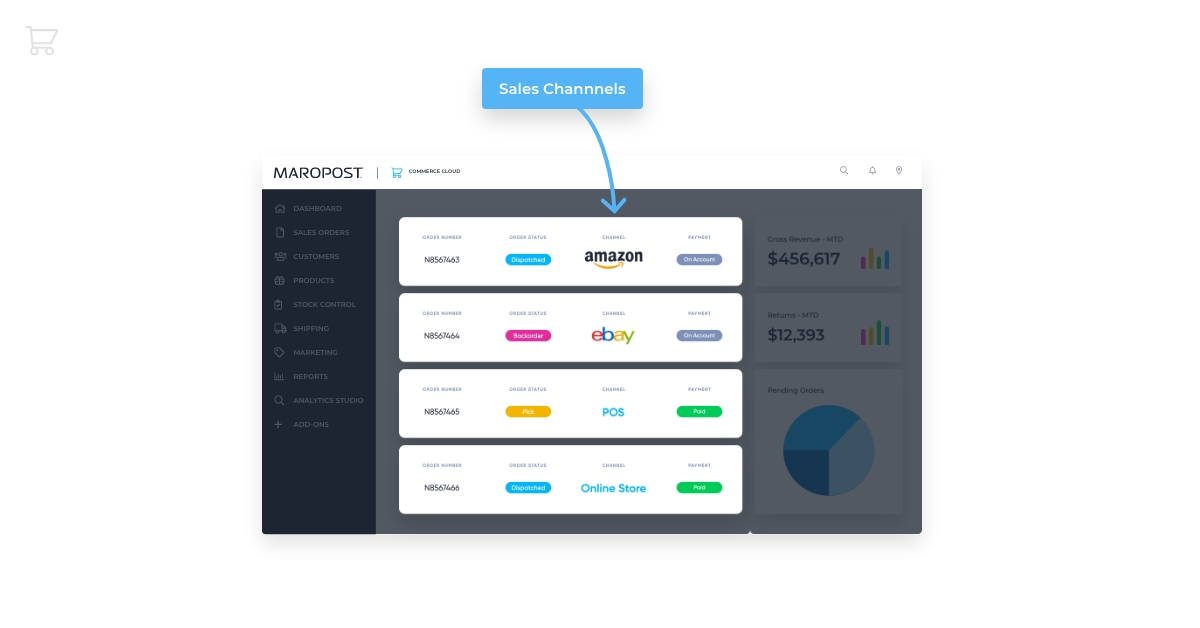
Digital marketing and social media provide insights into all marketing efforts, and your ecommerce system should do the same. You need fast, accurate and detailed reports that showcase all channels and tools you use to sell and how each of those are driving revenue. There’s no other way of making decisions, moving forward and really scaling your business. Running a holiday promotion and a seasonal sale just because everyone else is doing it is no longer effective.
Sign #9: Forced to do lots of repetitive things manually
The best ecommerce platform will save you time, not add tasks to your plate. It will take care of your inventory, payment gateways, shipping management and beyond. If you find yourself manually printing shipping labels and being a human payment processor, it’s time for a change.
Sure, you might’ve been doing this for a while and it worked just fine for you. If so, this is great news! It means that, once you automate all of that and focus on revenue-driving activities instead, you’ll see growth like never before.
Sign #10: Can’t manage inventory
Inventory management is by far one of the most effective ways of boosting your customer satisfaction (and profits). Keeping the right amount of inventory – not too little and not too much – is vital.
Building on the “expanding into B2B” example. Let’s say you did that. Your volumes probably rose, and that means that you got more inventory on hand, and now you need to store it all somewhere, insure it, move it from one place to another and discount or even discard it if it didn’t sell. Without a proper system of managing it, you can see how quickly inventory costs can add up and overwhelm you.
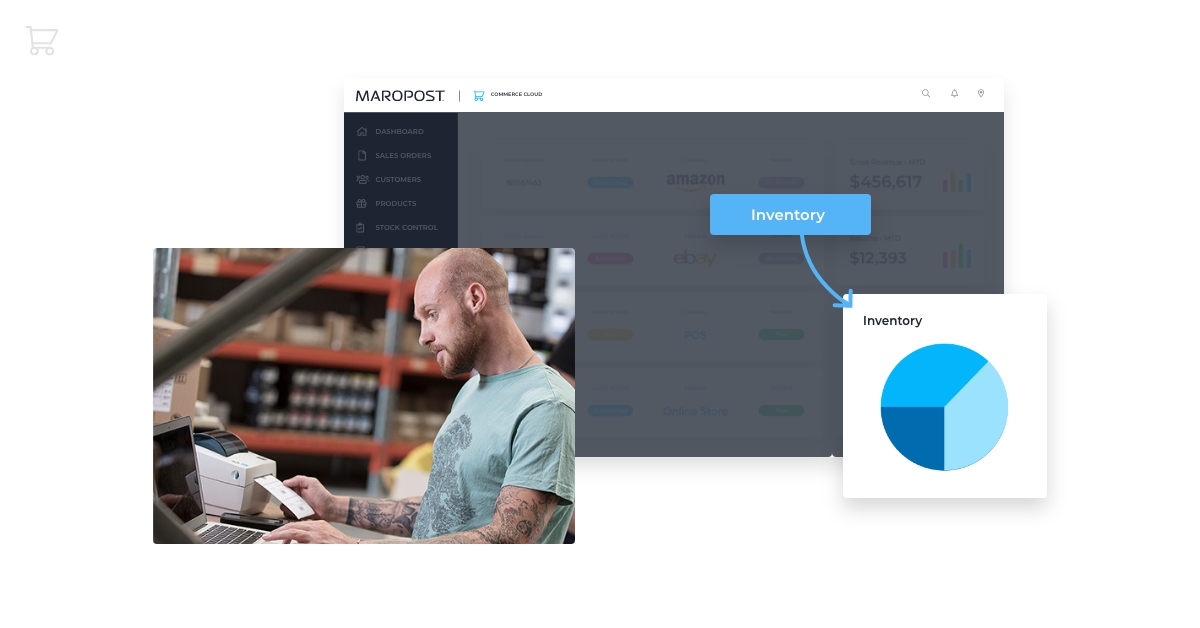
If you’ve got a system in place that can combine your inventory management with your sales and ordering systems, you’ll get real-time visibility into your stock levels. That allows you to place orders as soon as you’re running low, but also not order too much.
Your inventory data should also be accessible everywhere, backed up and secure. No matter where you are or what’s happening, you need to always know what’s the value of your stock.
Get a free trial
Your current ecommerce software might be holding you back – those are just facts. In fact, here are 4 ways it could be doing that (in addition to everything we’ve just explained). So stop standing in the way of your growth! If a simple ecommerce website builder worked for you at the very beginning, it doesn’t mean it’s still good for your business. Sure, it’s familiar, you’ve made it work, and you’ve made your piece with everything that’s not working. But you can do so much better with a system that gives you the freedom to really grow, drive revenue, and explore new opportunities.
If you’re not 100% ready to take the leap, one final piece of advice: get a free trial from a few different ecommerce solutions to test the waters. There are no obligations, but it will help you determine what you need.
Maropost Commerce Cloud is the current commerce platform for this kind of operation. Start a free trial or book a demo.